




Background and Advantages of Flutter HarmonyOS Modernization
HarmonyOS is a distributed, all-scenario operating system independently developed by Huawei. It connects people, devices, and scenarios to enable fast discovery, fast connection, hardware collaboration, and resource sharing, showing clear advantages in multi-device collaboration and distributed architecture. With strong performance and a rich component ecosystem, Flutter is widely used on Android and iOS and has become a preferred enterprise cross-platform framework. Huawei Developer Community has released a Harmony-compatible Flutter version, and a large number of Flutter third-party libraries have also completed Harmony adaptation, providing strong support for Harmony Adaption with Flutter.
Flutter Framework Principles
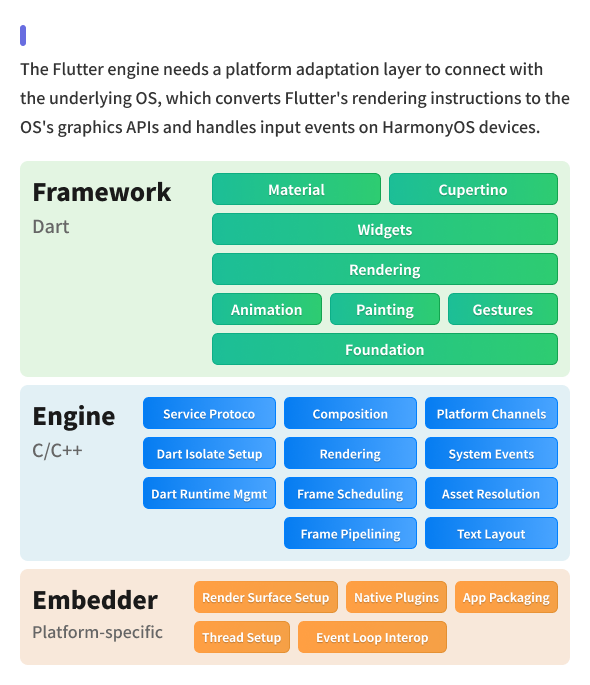
Architecture Design: Flutter is designed as an extensible layered system. It can be viewed as a collection of independent components, where upper layers depend on lower layers. Components cannot access unauthorized lower-level layers, and each part of the framework layer is optional and replaceable.
Six Major Challenges in Flutter HarmonyOS Adaptation

Architecture Differences
HarmonyOS and Flutter differ in system architecture and runtime mechanisms, requiring existing app logic to be restructured and adapted for Harmony requirements

Dependency Compatibility Issues
Some Flutter dependencies cannot run directly on HarmonyOS and require version replacement or function rewrites to ensure overall integrity and stability

Native Plugin Adaptation Complexity
Native plugins used by Flutter apps must be reconnected to Harmony interfaces, involving substantial low-level code adjustments with high adaptation complexity

UI Inconsistency
To align with Harmony design guidelines, Flutter UI components must be refactored to match Harmony visual style and interaction logic

Performance Optimization Challenges
Running Flutter apps on HarmonyOS may face bottlenecks such as rendering efficiency and memory usage, requiring targeted optimization
Insufficient Debugging Tool Support
Current Harmony support for Flutter development and debugging tools is limited, forcing developers to rely on experimental tools or manual debugging, affecting efficiency and issue localization speed
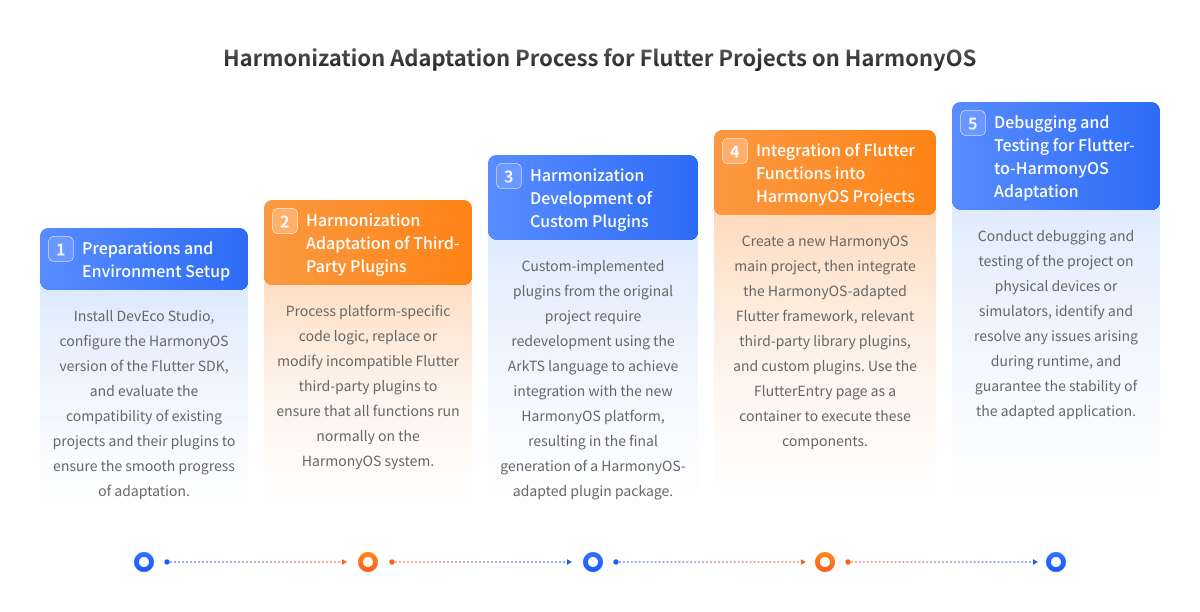
Five-Step Flutter HarmonyOS Modernization Process
Adapt existing Flutter apps to HarmonyOS NEXT by combining Harmony technical capabilities (such as ArkUI service capabilities) and Flutter cross-platform strengths to solve key issues including framework compatibility, feature adaptation, and performance optimization. Common adaptation path and key steps:
Common Issues and Solutions
1
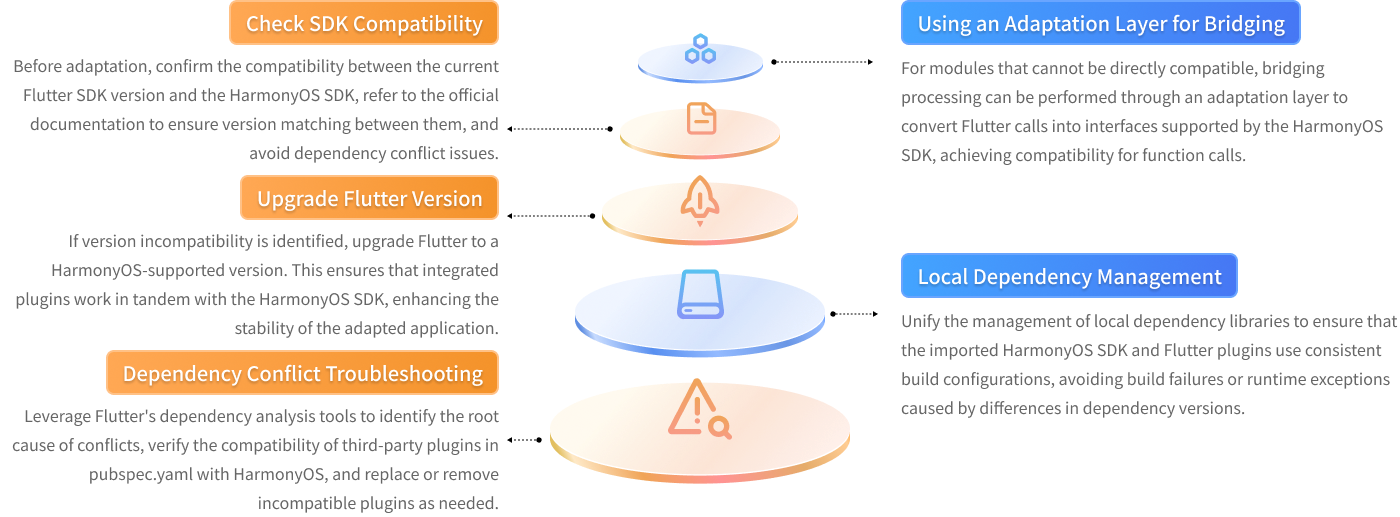
How to handle dependency conflicts between Flutter SDK and Harmony SDK
2
Flutter Harmony framework issue diagnosis and performance optimization




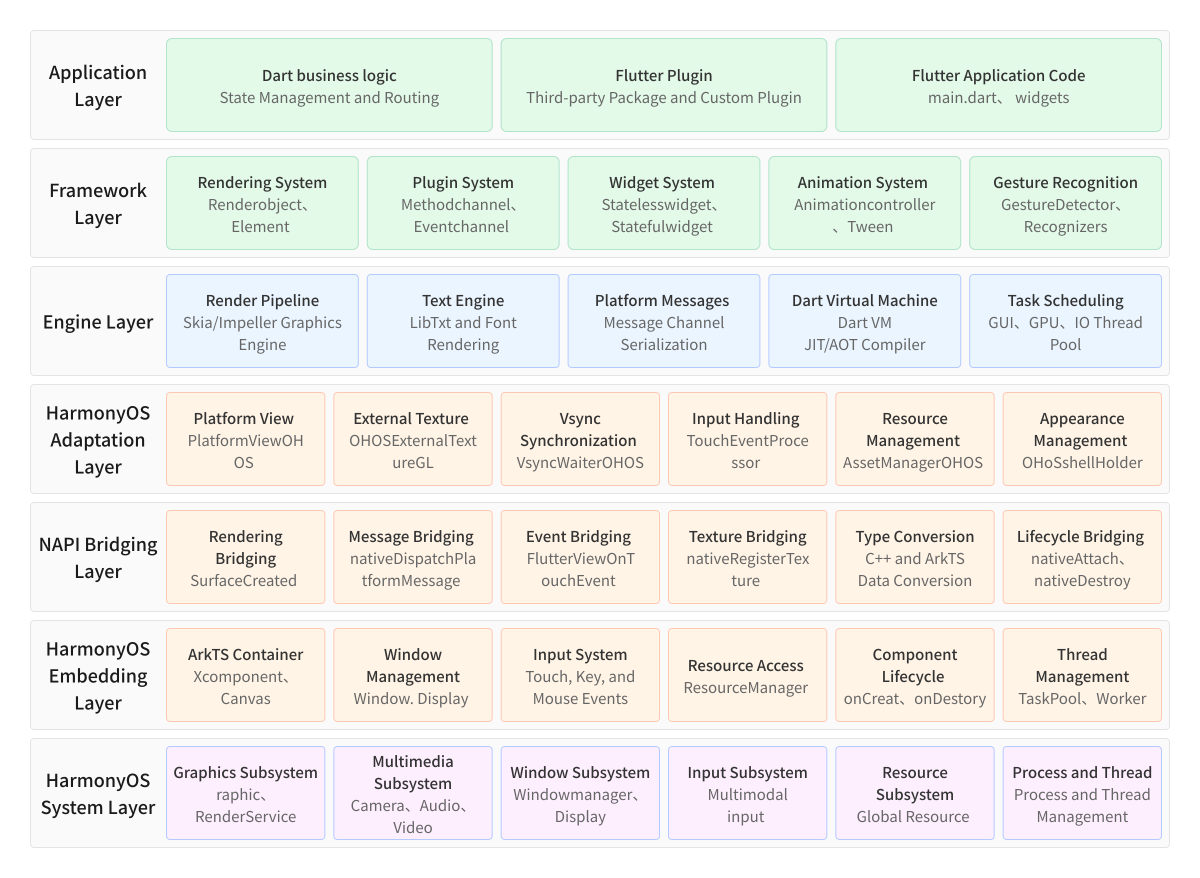
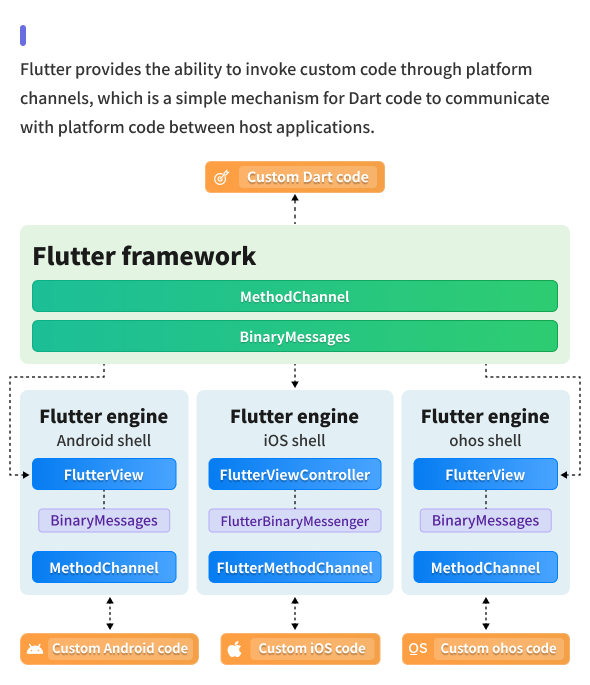
Harmony Adaptation Layer
The platform abstraction layer in Flutter cross-platform architecture that adapts common Flutter engine interfaces to Harmony-specific implementations
NAPI Bridge Layer
A communication bridge across heterogeneous languages, responsible for resolving language barriers between the C++ engine and ArkTS application layer
Harmony Embedding Layer
The host environment for Flutter content inside Harmony apps, providing native rendering containers and interaction entry points
3
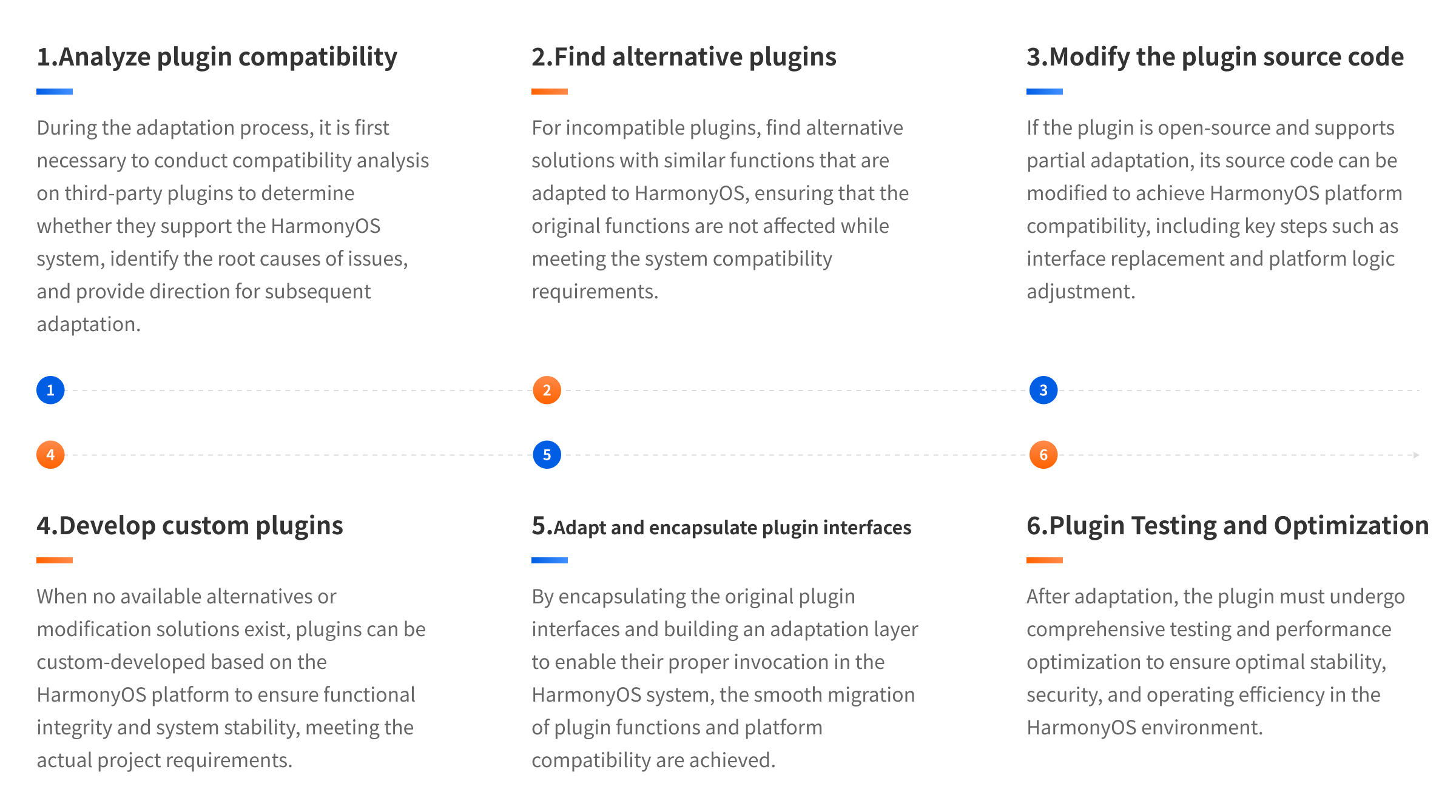
Six-step method for common plugin adaptation issues
Flutter Harmony Modernization Case Studies
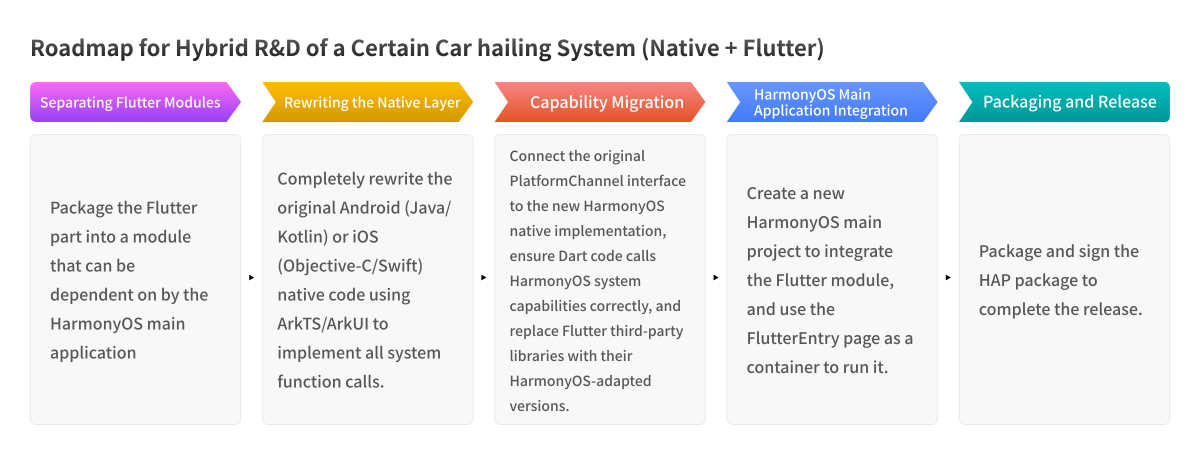
Case 1: Car hailing system
Background:
The Car hailing system serves contracted drivers and fleets, enabling order acceptance, order grabbing, dispatch, trip schedule, vehicle management, identity verification and profile display, as well as salary settlement and withdrawal.
Features:
Hybrid development (Native + Flutter)
Refactoring Plan:
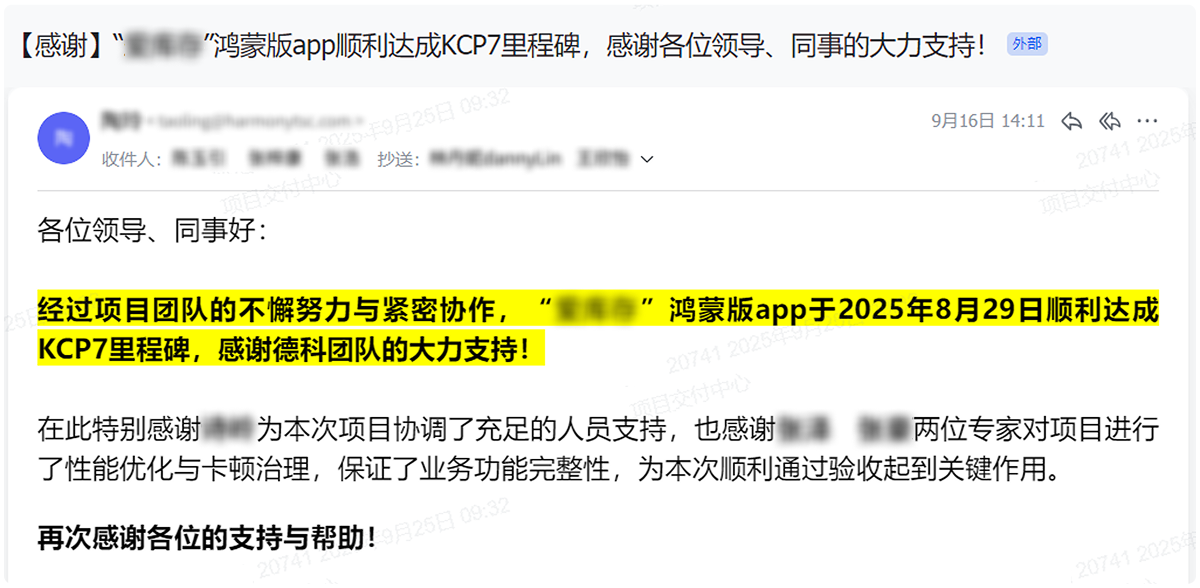
Customer Feedback:
Case 2: Online Education System
Background:
The online education system is a teaching tool derived from frontline educational research. It covers online and offline teaching scenarios, features innovation-driven classroom transformation and panoramic data collection for teaching insights, enabling more engaging and active teaching and learning experiences.
Features:
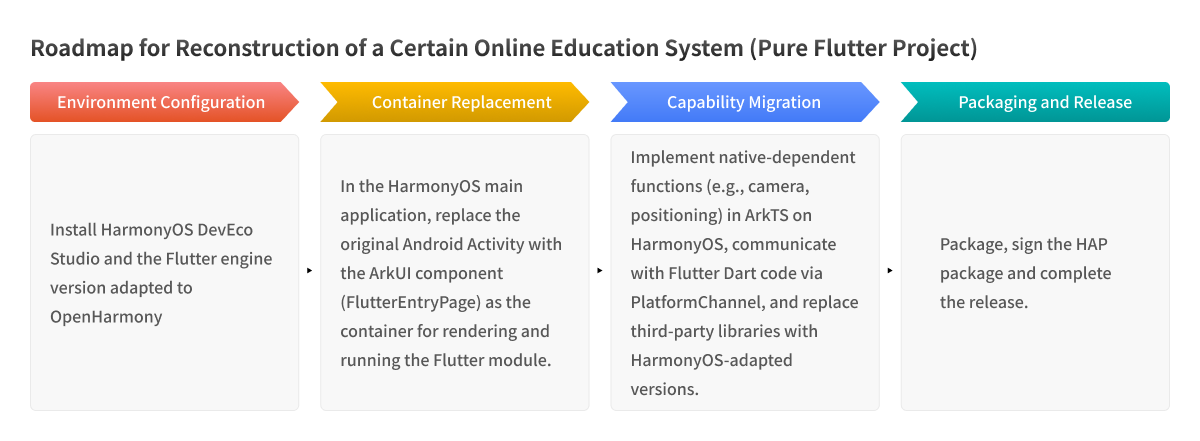
Pure Flutter project
Refactoring Plan:
Customer Feedback: